


In patriarchy women can do anything they fancy.
Provided, and as long as, men perceive it as low value.
This is the second in a 3-part series with more information on the examples of this pattern.
Covering filmmaking, dairy farming, seamstressing, rice farming, and restaurant kitchens.
This is 42 Sidenotes. The place for the incurably curious and endlessly fascinated. Where you’ll find multifaceted, opinionated observations, answers, and questions on life, the universe, and everything. Articles drop every other Sunday.
My article on the pattern of men butting in and taking over what women start, lives over on Deliberately Difficult & Laughing. It also tells you how turn it in your favor.
Researching that article I dug up 14 conspicuous examples of this pattern throughout history. Mindboggling illustrations of what happens when women show something men weren’t interested in has potential for money, status, or ego — or all three.
I’ve split them over a 3-part series because I don’t want to overwhelm you with the same infuriation I felt reading about how women were driven out.
Even if I don’t mention it, in all examples there’s one obvious underlying reason for why women were actively or passively driven out when men took an interest: men’s patriarchally conditioned gender bias against women.
Part 1 talked about programming, beer brewing and several medical fields.
Part 2, this one, covers filmmaking, dairy farming, seamstressing, rice farming, restaurant kitchens.
Part 3, will tackle botany, advertising copywriting, electronic music, cannabis.
#6: Filmmaking in early Hollywood
What changed was the size of the budgets
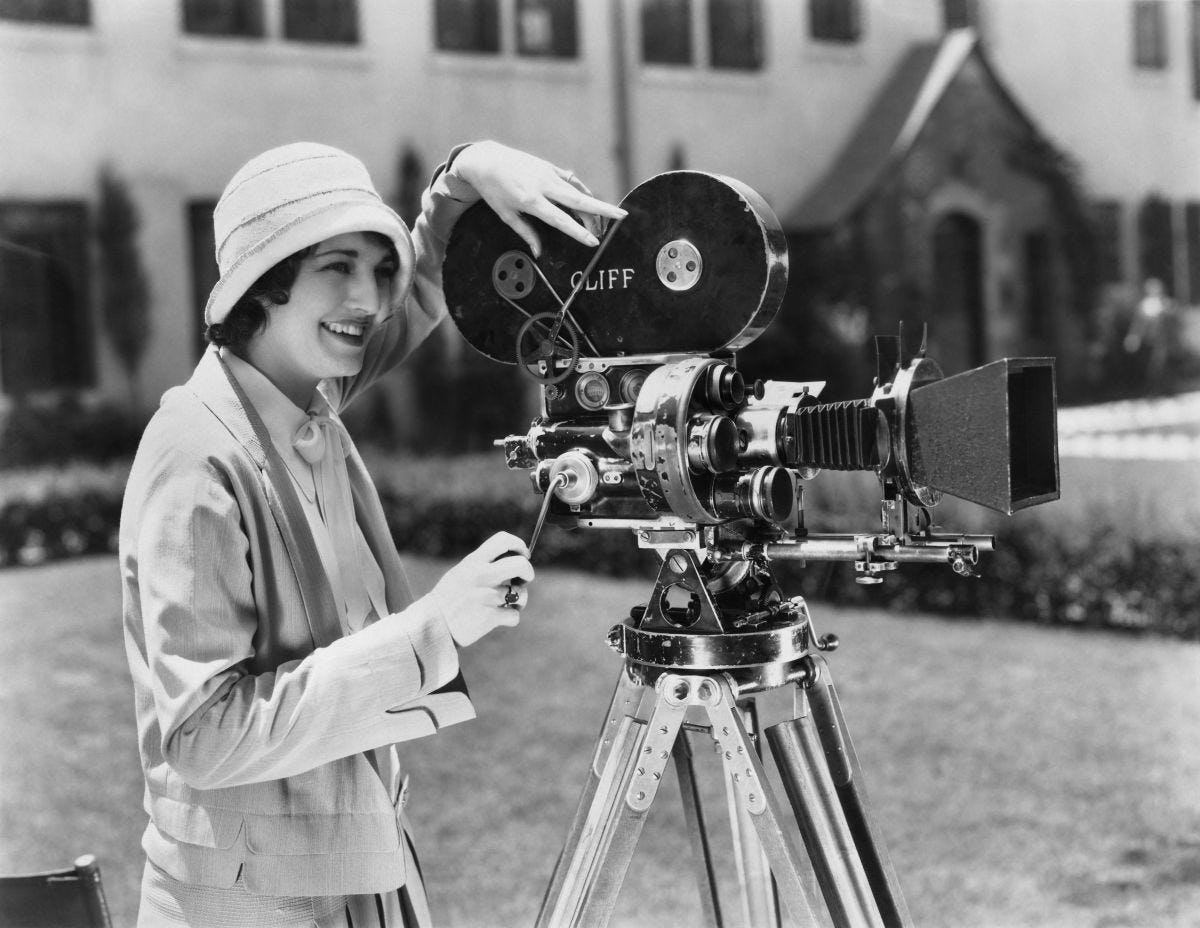
Early Hollywood modeled itself on theatre.
It sported an egalitarian work culture where everyone did everything. Women wrote, directed, and produced movies.
Movies’ popularity with the audience created a sharp increase in salaries and budgets.
It inspired the studio system to manage the money. It started what Karen Ward Mahar calls the masculinization of filmmaking.
Basically: as creating a movie demanded larger budgets, and men had more access and control over money, women lost access to the roles they previously held, despite their skills and success in them.
It’s ironic that the growth both created and destroyed the opportunity.
Sources:
Karen Ward Mahar, Women Filmmakers in Early Hollywood (Johns Hopkins University Press, 2006)
#7: Dairy farming in Canada
Separating cream “scientifically” apparently demanded “a man of no small caliber”.
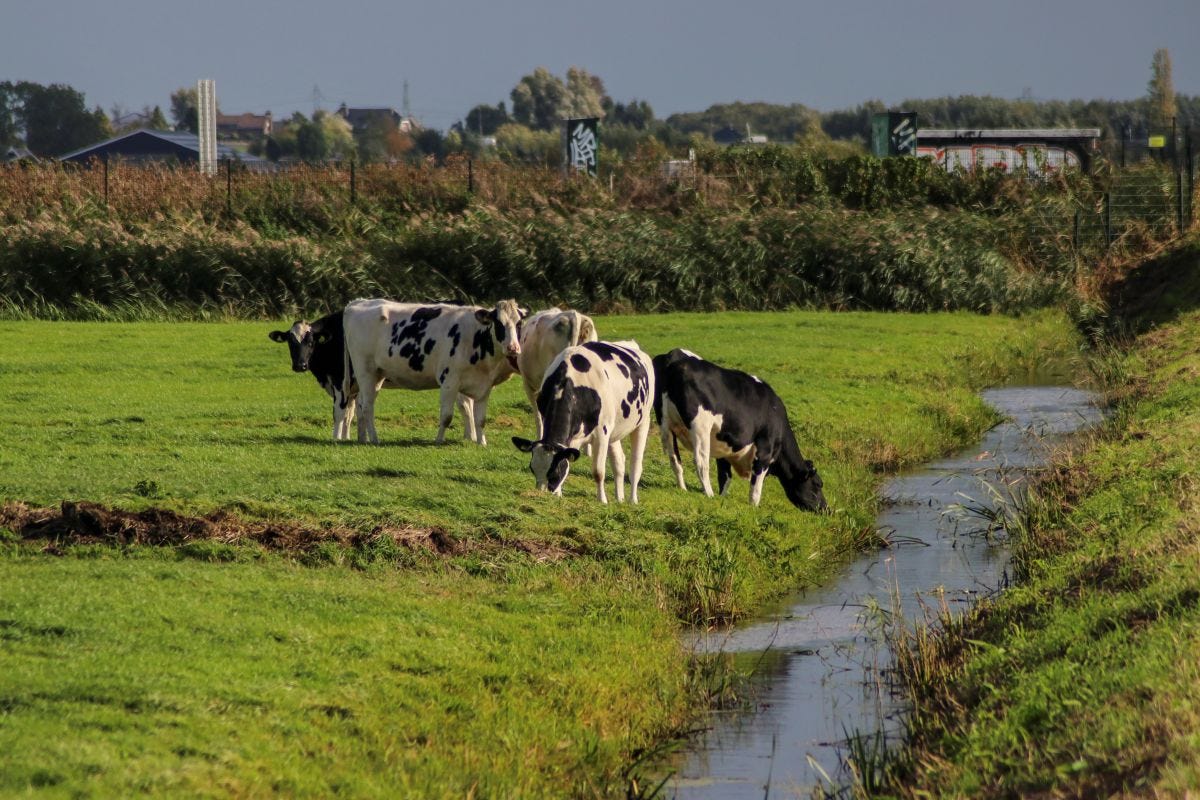
Butter and cheesemaking had a long standing as women’s work.
Men weren’t interested in it, until the sheer volume showed an opportunity.
The 26 million pounds of butter women produced on farms in 1861 is nothing to sneeze at. Ontario opened its first cheese factory in 1864. 7 years later, there were 353. By 1890 99% of cheese was produced in factories.
Men already owned the farms, made the decisions about money, and then (thus) owned the factories.
While at first, up until 1871, women still held 37% of the factory jobs, 30 years later they effectively held none.
In large part because dairy work was re-labeled from women’s work to scientific.
And, “obviously”, a woman can’t be trusted with scientific work.
Canada’s government can’t wash its hands in innocence about the male takeover.
It subsidized dairymen’s associations.
It supplied factory equipment.
It set up dairy schools for men.
It sent traveling dairy demonstrations to male farmers.
It gave nothing to the women who’d always been doing the work.
Interesting, isn’t it. When the women were the outright experts and c/should have been the “go to” choice.
This whole thing is absurd enough, what makes it worse is that it had another detrimental effect on women. As one put it: “when we had cows and hens, the women got the egg check and you had your own money”.
Sources:
Marjorie Griffin Cohen, “The Decline of Women in Canadian Dairying” (Simon Fraser University)
#8: Seamstresses and the guilds
Tailors’ guilds moved to control seamstressing when they smelled money
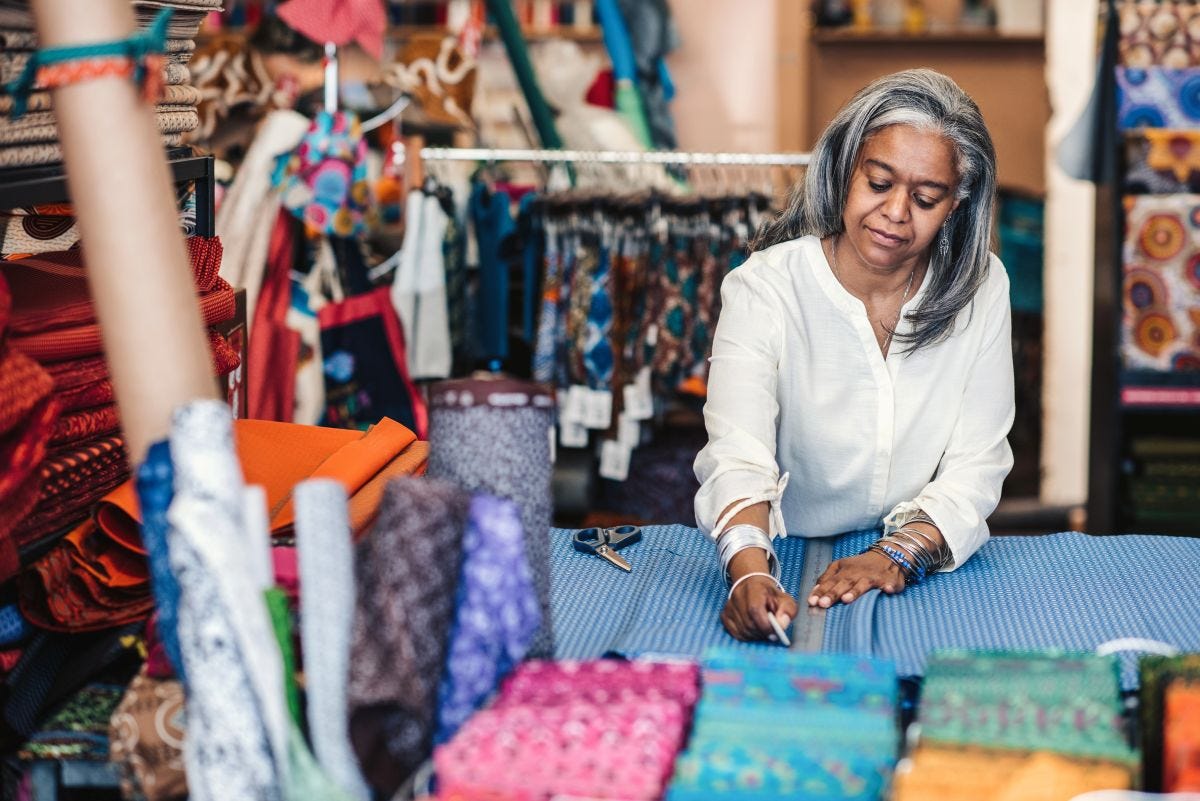
Back in medieval Paris, women dominated silk and textile trades, and they dominated the seamstressing trade.
It’s interesting, isn’t it, that tailor is just another word for the work of a seamstress…
In Lyon (the same place as the kitchens of the Mères Lyonnaise, #10 in the list), women’s silk production became “a significant factor in the city’s economy”.
Guilds cracked down on the “unlicensed” production. Just as they sought to control seamstressing when that became economically signification.
They wanted women out of making women’s clothing and especially wanted (to maintain) their monopoly on the high-value item: a two-piece dress worn by noblewomen at court.
This was a very conscious, very greedy choice. Not an inevitable outcome.
In Amsterdam a different choice was made. There, in 1579, seamstresses won independent guild status…
Being Dutch, I have to love that. Even if we have plenty of other gender bias challenges.
Sources:
Clare Haru Crowston, “Women, Gender, and Guilds in Early Modern Europe,” International Review of Social History (2008)
Merry Wiesner, Working Women in Renaissance Germany (Rutgers University Press, 1986)
#9: Rice farming in the Gambia
How “development work” turned rice into a cash crop, robbing women of the benefits of it being a women’s crop.
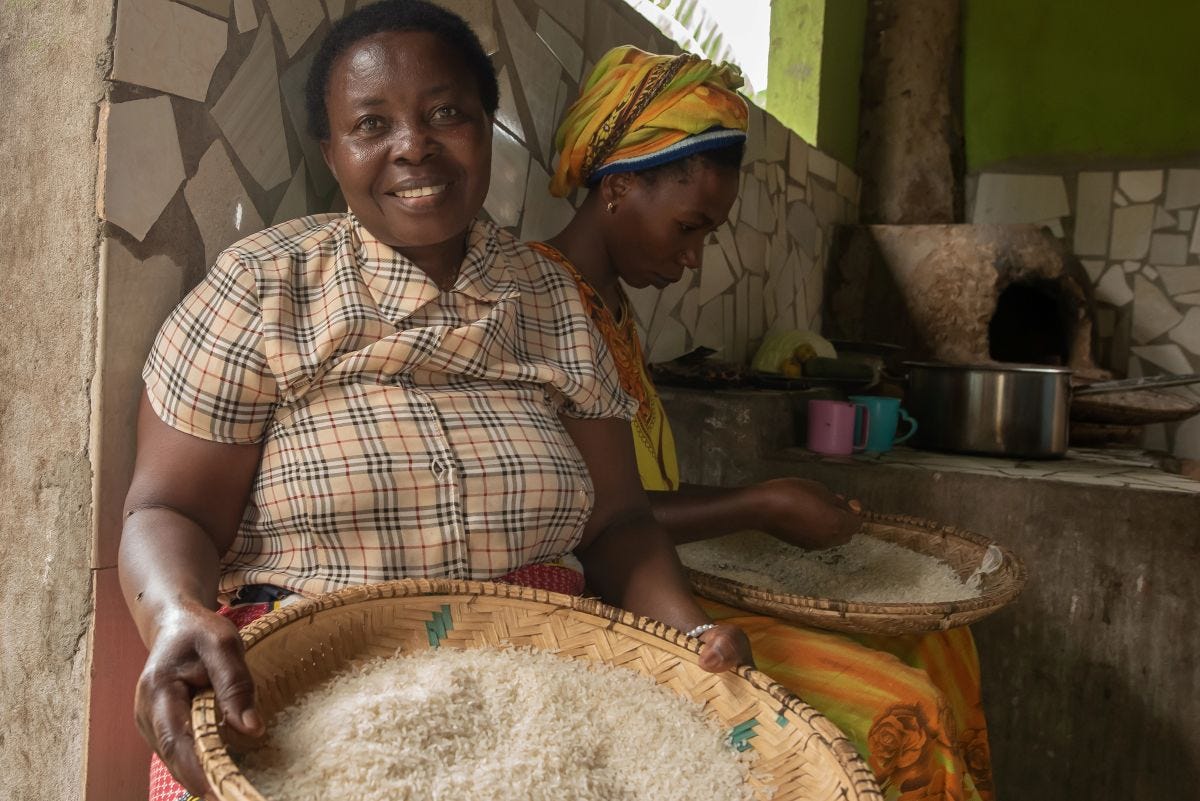
In Gambia, rice is a staple. It used to be a women’s crop. And women held land and labor rights around it.
The trouble with rice in a famine-prone country is that it’s seasonal. Growing it only possible for 5 months a year.
Well-meaning development agencies sought to remedy the famine risk by introducing pump-irrigation so rice could be grown year-round.
It turned rice from a gendered women’s crop into commercially viable, cash one.
The investment the pumps required and men controlling the capital, meant rice farming shifted from women to men.
And while the projects were a huge success in terms of food production (one Gambia still celebrates on its site), it also produced household conflict as the women’s rights around rice lost value (with irrigation you can grow in places you’d otherwise couldn’t) and as a result the women did too.
Sources:
Judith A. Carney, “Women’s land rights in Gambian irrigated rice schemes,” Agriculture and Human Values 15 (1998)
#10: Lyon’s restaurant kitchens
Women turned Lyon into a food capital and shaped France’s culinary identity
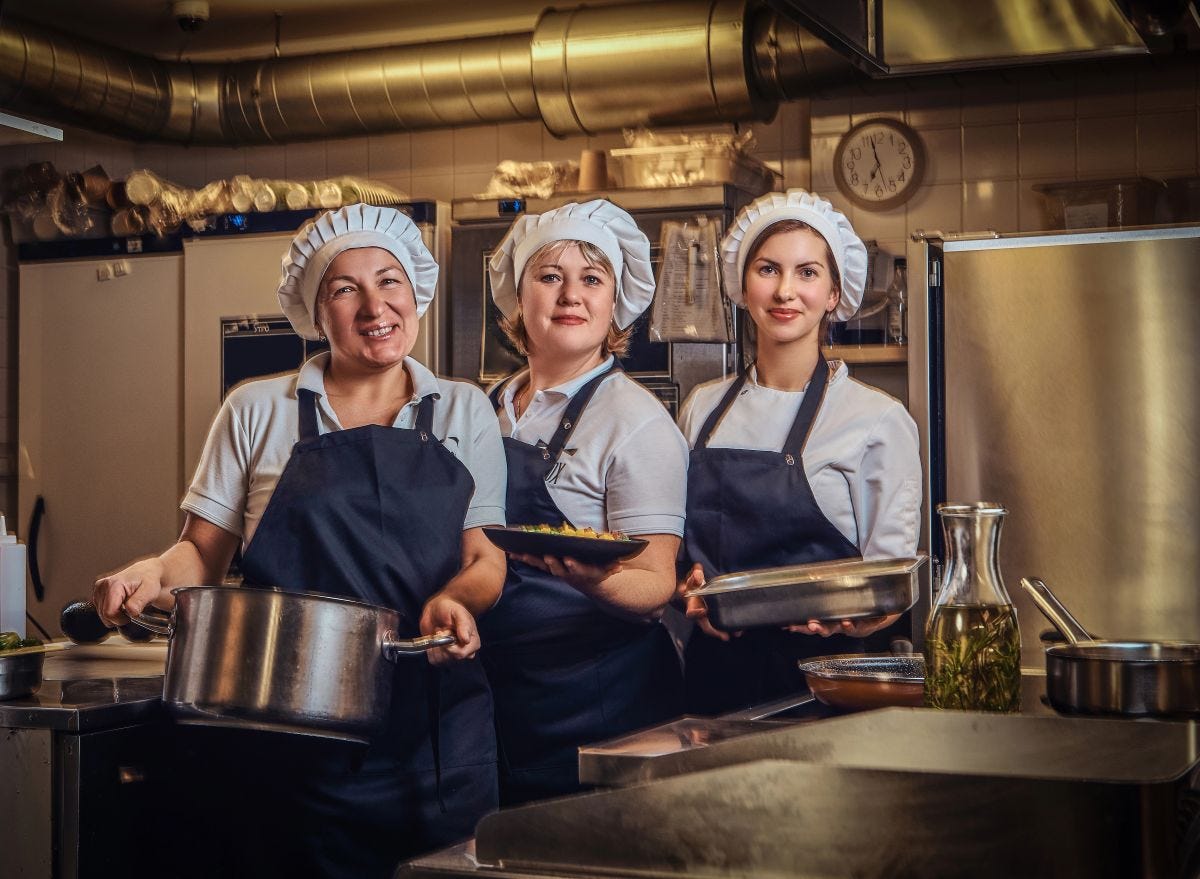
In the late 19th century the women who became the Mères Lyonnaise were working as cooks for wealthy bourgeois families. They were often referred to as mères de famille.
The became the Mères Lyonnaise when they opened their own restaurants, preparing simple, high-quality seasonal dishes using local ingredients.
They elevated regional Lyonnaise ingredients into a famous gastronomic tradition.
Among their culinary giants, Eugénie Brazier was one of the biggest. She was the first-ever woman to receive three Michelin stars for two separate restaurants. Other famous members were Mère Fillioux and Mère Léa.
Haute cuisine at its finest.
Their one mistake: training now legendary male chefs like Paul Bocuse.
It (probably) started their decline after their heyday that lasted from the late 19th to early 20th century, especially the period between the two World Wars.
Probably because my sources are journalistic and I haven’t verified their claims (yet), I can’t say out right that there’s a causal relationship. However, against the patriarchal background and human beings being what they are…
Sources:
Euronews Culture, “The mères lyonnaises” (2026)
The Good Life France, “Mères Lyonnaises”
Treat as journalism. Verify before making a causal claim.
But wait… there’s more

This is the second in a 3-part series.
Part 1 looked at programming, beer brewing, and several medical fields.
Part 3 will cover botany, advertising copywriting, electronic music, cannabis.
After my article about the pattern went live on Deliberately Difficult & Laughing, Rosemary Bointon, drew my attention to pharmacy. It’s an illustration alright. Though witch hunts being aimed at women healers is a myth (popularized by a book in the 1970s and taken apart in 1990), it sure as heck wasn’t an encouragement. The story has an interesting twist at the end so I’ll probably create a separate bonus to the series for that.
Live long and prosper.
